According to Lussier & Achua (2015), leadership guides others to achieve a particular objective/s. Leadership is multifaceted since every leader has a style that changes over time according to internal and external factors. Regardless, suitable leadership is fundamental and the key to success for all organizations. In previous decades, most organizations operated under traditional leadership, focusing on objective outcomes like maximizing productivity and increasing profits. Despite its benefits, it emphasized short-term benefits and did not consider the needs of the stakeholders in the external environment. According to Visser & Courtice (2020), sustainable leadership goes beyond meeting the immediate objectives to focus on how the organization influences society, the environment, and the future. In this sense, sustainable leaders provide direction and inspiration towards growing their organizations and improving society and the world at large. In simpler terms, sustainable leaders operate with the framework illustrated below.
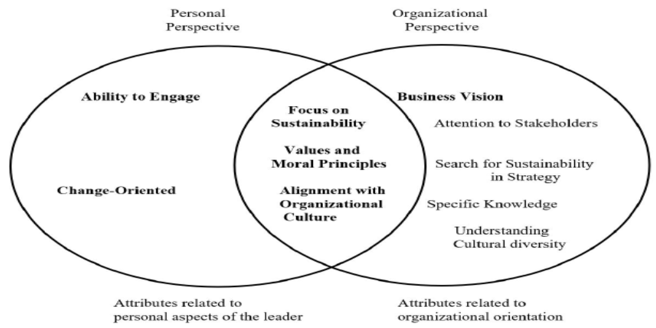
Fig. 1. Elements of sustainable leadership. Source: https://www.scielo.br. (2020)
The difference between sustainable leadership and leadership
- Inclusion
In ordinary leadership, organizational leaders/managers direct and manage team members to achieve objectives. In this state of affairs, leaders hold a prime position that overlaps the viewpoints/contributions of all other team members in decision-making and other processes. This situation often excludes strong opinions, especially from lower organizational-level stakeholders. Sustainable leaders promote inclusion and equal participation by considering, understanding, and integrating the views and opinions of all stakeholders to benefit the organization and society (Tideman, Arts & Zandee, 2013). Alternatively, sustainable leaders actively seek knowledge and are emotionally intelligent.
- Revolutionary innovation
Although transformation is essential to leadership, ordinary leadership draws ideas from traditional frameworks. For instance, ordinary leaders often preserve traditional communication strategies and decision-making procedures, gradually hindering organizational growth. Unlike ordinary leaders, sustainable leaders are more creative and aim to transform their firms, society, and the world by challenging conventional and restrictive approaches. Typically, they are more interested in making a difference by eliminating excessive and complicated procedures that reduce profits and hinder sustainability (Armani et al., 2020).
- Multidimensional/systems thinking
Traditionally, leaders focus only on the critical aspects within the confines of their organizations, like resources, profits, and stakeholders. Due to this, most organizations are adversely affected by external factors beyond the leader’s ability to control. Even though their primary responsibility lies within the organization, sustainable leaders explore the vast external environment to understand the social and environmental systems to create products in line with the prevailing conditions, and hence, they benefit from competitive advantage. Alternatively, sustainable leaders keenly assess complex organizational or external issues and develop strategies to approach potential risks, uncertainties, and dilemmas that stem from their actions (Tideman et al., 2013)
- Long-term orientation
Despite that, all leaders require a vision and objectives; aligning both matters most. As stated, ordinary leaders work on short-term benefits like boosting sales, minimizing costs, and increasing profits. Although such goals are crucial, sustainable leaders set monumental long-term objectives that will make notable impacts on the organization, society, and the world (Haan et al., 2015). Sustainable leaders often encounter numerous setbacks and resistance from stakeholders who do not perceive the immediate profitability of long-term objectives. Nonetheless, sustainable leaders stay on course, considering that their ideas are much more valuable and lasting than their immediate benefits (Armani et al., 2020).
- Alternative purpose
All business institutions aim at creating wealth through providing products and services. Although leaders recognize the importance of their stakeholders, clients, and other resources, they act in the best interest of their organizations. Sustainable leaders have a moral purpose: creating and promoting trust, integrity, and human value within and outside the environment (Hagreaves, 2012). In this sense, they develop and strengthen human and natural resources, redefine organizational systems to promote equality and diversity, and preserve and protect our legacy as human beings (Hargreaves, 2012).
Benefits of sustainable leadership
- Competitive advantage
Since sustainable leaders consider both short and long-term implications of their organizations on society and the future, they are likely to appeal to boost their brand image and attract more clients and investors who recognize that the organizations aim to transform the world and the future while at the same time catering for their needs through providing products and services (Avery & Bergsteiner, 2011).
- Reducing costs
Sustainable leaders choose the best over the most convenient approaches for their organizations. In this sense, their choices emanate from observation, research, and a vision for the future. In this light, sustainable leaders reduce operational costs by choosing and adopting the most suitable approaches that equally benefit all stakeholders (Gerard et al., 2017).
- Increased compliance
Sustainable leaders recognize the impact of their organization’s operations on society and the environment. Bearing this in mind, they aim to reduce losses through litigation and other damage control measures by ensuring all stakeholders adhere to the existing regulations and policies (Iqbal et al., 2020).
- Resource mobilization
According to Hargreaves (2012), sustainable leaders develop their vision by learning from past experiences. Using that trajectory, sustainable leaders attract investors, employees, and partner organizations by ensuring that their organizations steer clear of social and environmental issues that may ruin their public image.
The future of sustainable leadership
Sustainable leadership has evolved dramatically in recent years. Initially, organizations mainly focused on reducing costs and strengthening their brands through complying with sustainability regulations. Sustainable leaders use their skills to increase brand loyalty, boost product innovation, and penetrate untapped markets (Tideman et al., 2013). Due to the stiff competition in the global business environment, sustainable leaders in the future will have to create more innovative strategies to increase sustainability in their products and ensure that all stakeholders understand the impacts of their responsibilities to society and the environment.
Integration of sustainable leadership with leadership theories
Leadership theories denote various explanations as to why particular people emerge as leaders. According to Taylor (2020), sustainable leadership is not a separate framework. Instead, it is a background in which we can explore existing leadership theories to understand the concept and relevance of leadership. Several theories fit into sustainable leadership.
- Servant leadership theory
According to this paradigm, leaders should prioritize the needs of others instead of their interests (Van Dierendock, 2011). This theory resonates with sustainable leadership because both view leadership as an opportunity to listen, show empathy, and guide all stakeholders to achieve collective and personal objectives. Notwithstanding, servant leadership and sustainable leadership vary in that the former seeks to attain short-term goals while the latter projects toward future needs.
- Transformational leadership theory
In transformational leadership, the leader initiates and steers organizational change by inspiring other stakeholders to participate in the transformative processes (Diaz-Senz, 2011). This theory is similar to sustainable leadership because of exhibit inspiration, motivation, and innovation, ultimately leading to change. Nonetheless, these theories differ because transformational leadership depicts the leaders as the sole source of innovation, while sustainable leadership allows all stakeholders to contribute equally to change since leaders are not permanent.
- Ethical leadership theory
This paradigm asserts that leadership should stem from values and ethics that promote dignity, fairness, honesty, rights, and respect for others (Lussier & Achua, 2015). This theory concurs with sustainable leadership since both hold leaders responsible for creating environments where all stakeholders operate under the above elements. Unlike the ethical leadership theory, sustainable leadership fosters respect, justice, honesty, and dignity beyond the organization to the society and the environment with special consideration to the future.
- Charismatic leadership theory
According to this theory, leaders employ emotional competence, extraordinary communication skills, and other charming characteristics to mobilize other stakeholders to achieve specific objectives (Lussier & Achua, 2015). Like charismatic leadership, sustainable leadership builds trust, compassion, and empowerment among all team members. Nevertheless, sustainable leadership differs from charismatic leadership because, in the latter, leaders draw influence from their predecessors and pass their influence (charisma) to other stakeholders who are prospective leaders.
Additional elements that should be incorporated into sustainable leadership
The present unpredictability of the global business environment proves that high performance is no longer a measure of effective leadership. In this way, sustainable leaders have developed more practical approaches to deal with business dynamics. Below are some critical elements that sustainable leaders must integrate into practice.
- Consciousness
Technology provides unlimited access to information worldwide through utilizing technology and information. Sustainable leaders should conduct profound research on sustainability in the context of their organizations and increase their awareness and ability to anticipate and stay in tandem with any changes in the global business environment (Tideman et al., 2013).
- Interconnectedness
Sustainable leadership recognizes the importance of interdependence between stakeholders, society, and the environment. However, more networks should be established to promote sustainability to its full potential. In this sense, leaders should develop more connections that concern critical social issues like poverty eradication and social justice (Armani et al., 2020)
Conclusion
This paper examined sustainable leadership from an organizational perspective. The definition of organizational leadership has significantly shifted from the individual context based on organizational objectives to sustainable leadership that promotes and considers the present and future requirements of the organization and the world. Observably, sustainable leadership’s financial and non-financial benefits overlap profits and other objective outcomes derived from ordinary organizational leadership. Since leadership remains flexible, sustainable leaders should stay in tandem with changes occurring presently and those expected in the future.
Recommendations
This paper recommends the following actions to foster sustainable leadership.
- Leaders should be informed of stakeholders’ interpretations, opinions, perceptions, and attitudes concerning sustainable leadership.
- By understanding how stakeholders perceive sustainability leadership, sustainable leaders should provide a clear vision that fits their organizational environments, culture, and operations.
- Sustainable leaders and all stakeholders should assess sustainable leadership levels within organizations to ensure that it aligns with short and long-term objectives.
Reference
Armani, A.B., Petrini, M. and Santos, A.C., 2020. What are the Attributes of Sustainable Leadership?. Revista Brasileira de Gestão de Negócios, 22(4), pp.820-835.
Diaz-Saenz, H.R., 2011. Transformational leadership. The SAGE handbook of leadership, 5(1), pp.299-310.
Gerard, L., McMillan, J. and D’Annunzio-Green, N., 2017. Conceptualizing sustainable leadership. Industrial and Commercial Training.
Haan, T., Jansen, P.G.W. and Lighthart, P., 2015. Sustainable leadership: What is required from future leaders?.
Iqbal, Q., Ahmad, N. H. and Halim, H. A. (2020) ‘How Does Sustainable Leadership Influence Sustainable Performance? Empirical Evidence From Selected ASEAN Countries’ SAGE Open. DOI: 10.1177/2158244020969394.
Lussier, R.N. and Achua, C.F., 2015. Leadership: Theory, application, & skill development. Cengage learning.
Taylor, A., 2020. Six Principles of Sustainability Leadership – André Taylor | Business School. [online] Unsw.edu.au. Available at: <https://www.unsw.edu.au/business/agsm/the-leader/Six-Principles-of-Sustainability-Leadership- Andr-Taylor> [Accessed 22 June 2021].
Tideman, S.G., Arts, M.C. and Zandee, D.P., 2013. Sustainable leadership: Towards a workable definition. Journal of Corporate Citizenship, (49), pp.17-33.
Van Dierendonck, D., 2011. Servant leadership: A review and synthesis. Journal of Management, 37(4), pp.1228-1261.
Visser, W. and Courtice, P., 2020. Sustainability Leadership: Linking Theory and Practice. Effective Executive, 23(1), pp.26-39.


